August 30, 2026 | by Carezone Healthcare
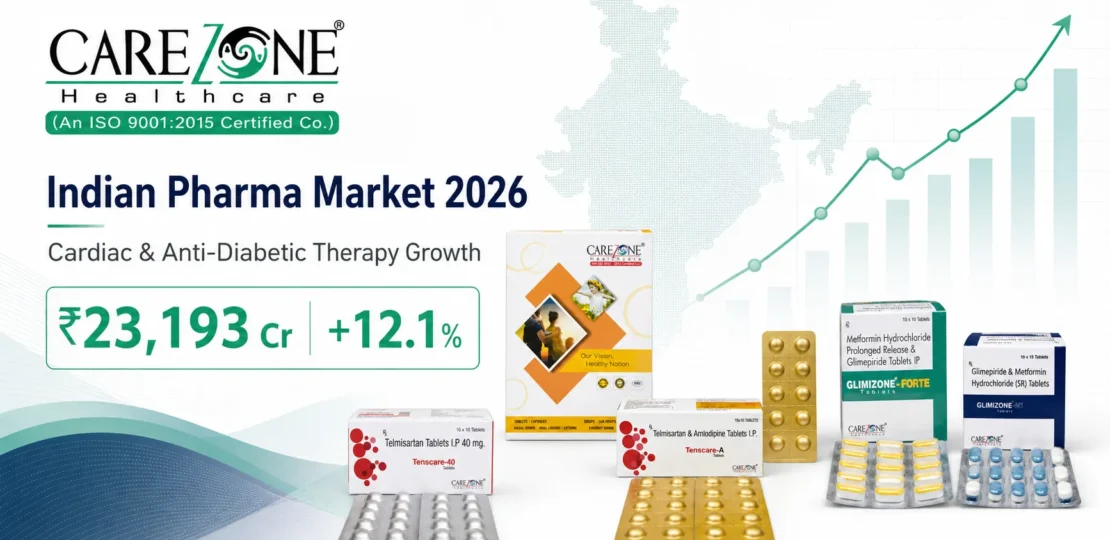
As of 29 August 2026, the latest complete monthly data available for the Indian pharma market 2026 points to strong momentum across several chronic and specialty therapy segments.
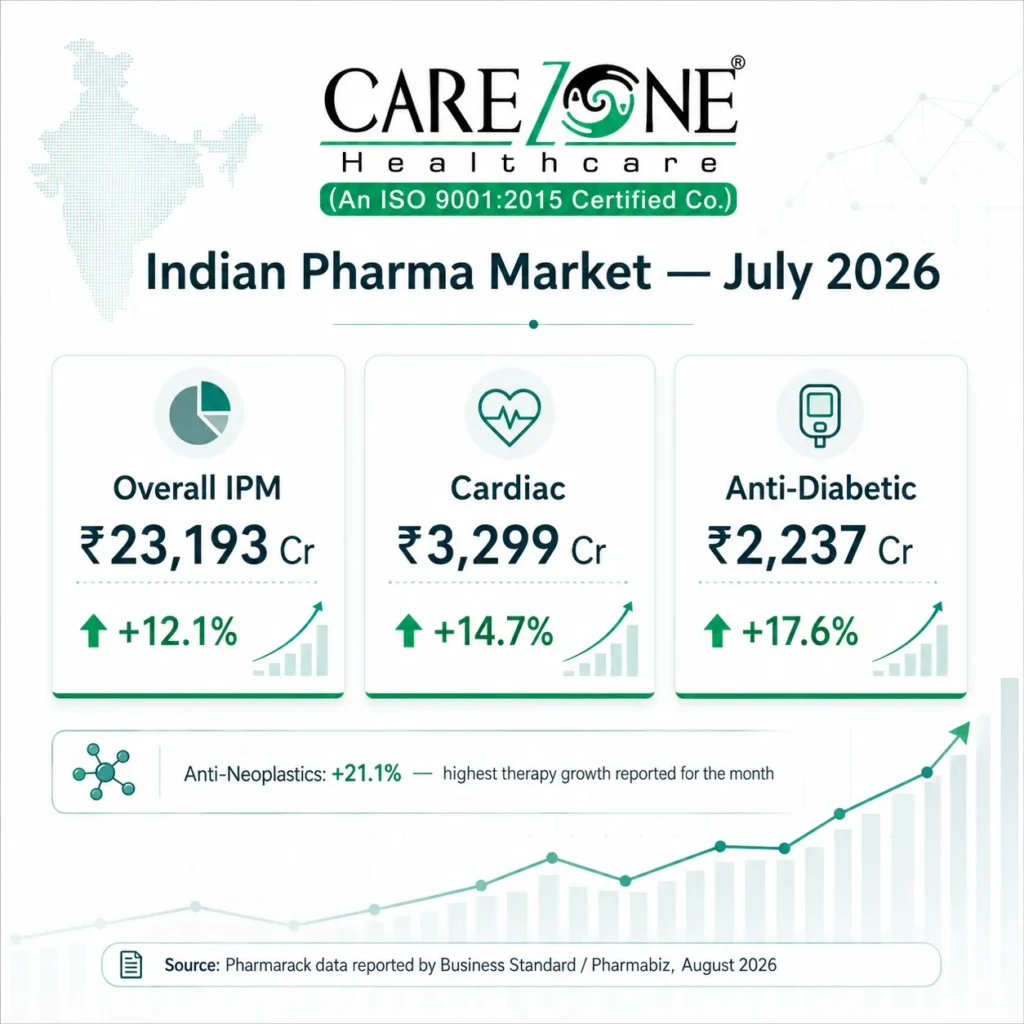
According to Pharmarack-based industry reporting, the Indian Pharmaceutical Market (IPM) reached approximately ₹23,193 crore in July 2026, recording 12.1% year-on-year value growth. Within the same period, cardiac therapies grew approximately 14.7% to ₹3,299 crore, while anti-diabetic therapies grew approximately 17.6% to ₹2,237 crore. Both therefore expanded faster than the overall pharmaceutical market.
For PCD pharma franchise partners, distributors and pharmaceutical marketers, however, these figures require careful interpretation. Market-value growth is influenced by pricing, new product introductions and actual unit-volume growth, so rising national market value does not automatically mean equal growth for every product, company or territory.
This article examines what the latest data actually shows, why cardiac and anti-diabetic therapies are becoming increasingly significant in India’s pharmaceutical market, and what business partners should evaluate before building a therapy-focused product portfolio.
Cardiac and anti-diabetic therapies benefit from a combination of India’s large chronic-disease burden, expanding screening and diagnosis, long-term medical management and continued development of chronic-care product portfolios.
However, therapy growth should be viewed as market intelligence rather than a guarantee of business performance. A PCD franchise partner still needs to evaluate local demand, doctor coverage, competition, product availability, working capital and territory-specific conditions before selecting a range.
The latest complete monthly figures available for this analysis show the Indian Pharmaceutical Market generating approximately ₹23,193 crore in July 2026, compared with around ₹20,494 crore in July 2025.
That represents approximately 12.1% year-on-year value growth.
Industry reporting also placed the domestic market at approximately ₹2.57 lakh crore on a moving annual total basis, reflecting the substantial scale of India’s pharmaceutical market.
The July numbers are particularly significant because growth was not concentrated only in acute or seasonal categories. Several chronic and specialty therapies recorded stronger value growth than the overall market.
| Therapy / Market | July 2026 Value Growth |
|---|---|
| Overall Indian Pharmaceutical Market | 12.1% |
| Cardiac | 14.7% |
| Anti-Diabetic | 17.6% |
| Urology | 14.0% |
| Neuro / CNS | 13.4% |
| Anti-Neoplastics | 21.1% |
An important clarification is necessary here.
Cardiac and anti-diabetic therapies were not the two fastest-growing therapy categories overall. Anti-neoplastics recorded higher reported growth during July.
Cardiac and anti-diabetics nevertheless deserve particular attention because they combine strong double-digit growth with large existing market size and chronic-care relevance.
For pharmaceutical businesses, that combination can make them important categories to understand when evaluating long-term product portfolios.
Cardiac conditions, hypertension and diabetes differ commercially from many short-duration acute conditions because chronic diseases commonly require continuing clinical management rather than a single short treatment cycle.
This does not mean that every chronic product category will grow every month or that every chronic medicine will experience the same market demand.
It does mean that factors such as:
can create different demand patterns from short-term seasonal categories.
In July 2026, the broader chronic segment reportedly represented around 36% of the pharmaceutical market, generating approximately ₹8,252 crore and recording around 16% value growth.
Reported chronic-segment volume growth was much lower than value growth, reinforcing an important point: market expansion needs to be understood beyond headline percentages.
Government data from India’s National Programme for Prevention and Control of Non-Communicable Diseases illustrates the scale of hypertension and diabetes screening and treatment.
As of February 2026, programme data reported:
These figures should not be converted directly into pharmaceutical-sales estimates.
They do, however, demonstrate the scale of India’s chronic-disease screening and treatment ecosystem.
Cardiac was reported as the largest therapy segment by value in July 2026, generating approximately ₹3,299 crore and recording around 14.7% year-on-year value growth.
Several structural factors help explain why the cardiac category remains commercially significant.
Hypertension and cardiovascular risk factors affect a substantial number of people across India.
Government NCD programme data alone reported around seven crore hypertension diagnoses by February 2026.
The scale of the patient population creates an important long-term healthcare context for cardiac therapy.
Many cardiovascular conditions require ongoing monitoring and medical management.
From a pharmaceutical-market perspective, this creates a different demand structure from products used primarily for short treatment courses.
India’s NCD programmes continue to emphasise population screening, diagnosis, referral and treatment.
Greater detection does not translate directly into equal pharmaceutical-sales growth, but it can increase the number of individuals entering structured healthcare and chronic-care pathways.
Cardiac care covers multiple therapeutic requirements rather than a single product type.
For a pharma distributor or PCD franchise partner, this means a cardiac portfolio should be selected carefully rather than built around only one nationally growing product.
Business buyers interested specifically in this segment can explore Carezone Healthcare’s Cardiac & Diabetic Range.
Anti-diabetic therapies recorded approximately 17.6% value growth in July 2026, substantially above the total IPM growth rate of 12.1%.
Several factors are relevant.
The ICMR-INDIAB study estimated approximately 101 million people living with diabetes in India, based on its study projections, with another large population estimated to have prediabetes.
These are epidemiological estimates rather than pharmaceutical-demand forecasts.
However, they demonstrate the scale of metabolic disease in India and help explain why diabetes remains an important healthcare and pharmaceutical category.
July pharmaceutical-market analysis also reported a meaningful contribution from new product introductions.
Across the overall IPM, new products contributed approximately 3.7 percentage points of reported July growth.
Anti-diabetic therapy was one category where new-product activity was particularly relevant.
Industry reporting has also highlighted commercial activity around newer metabolic and diabetes-related therapies.
This should be interpreted only as a pharmaceutical-market trend.
It is not medical advice or a recommendation for any medicine. Diabetes treatment decisions must remain under the supervision of qualified healthcare professionals.
This distinction is particularly important for PCD pharma franchise partners.
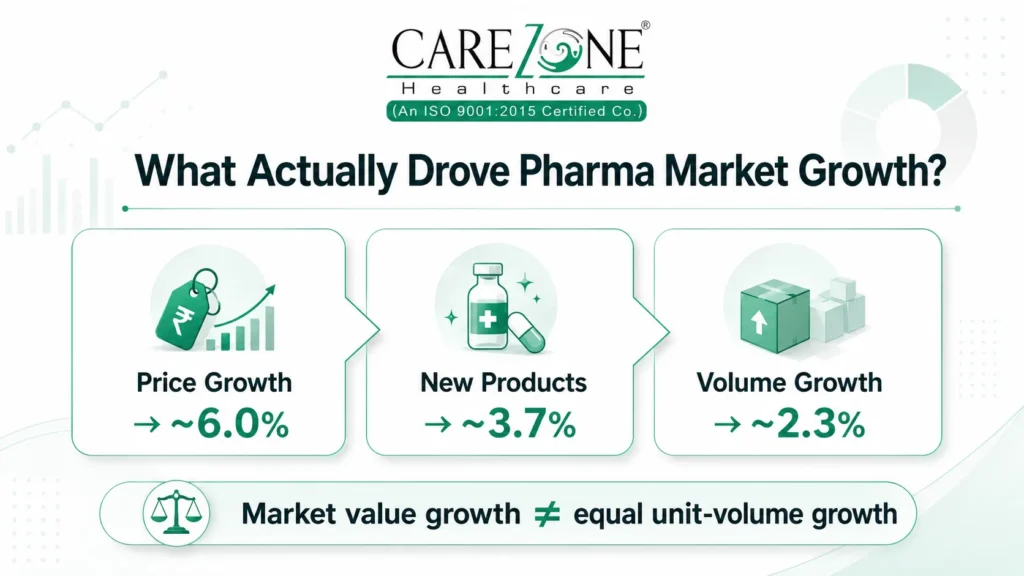
The Indian pharmaceutical market recorded approximately 12.1% value growth, but the increase was not produced solely by higher unit volumes.
July industry analysis broadly attributed market growth to:
Another industry data source reportedly placed overall July unit growth at around 1.6%.
The exact measurement may vary depending on the dataset and methodology, but the underlying lesson remains important:
Market value growth and unit-volume growth are not the same thing.
A PCD partner should therefore not read:
“The cardiac market grew 14.7%”
and automatically conclude:
“My cardiac product sales in my territory will increase 14.7%.”
National pharmaceutical growth combines multiple factors.
Actual local business performance depends on:
Current market data can help pharmaceutical business partners understand where activity is occurring, but it should be used as one input in product selection rather than a guarantee of performance.
If you are still learning how the business model works, read our detailed guide: What Is a PCD Pharma Franchise? Complete 2026 Guide.
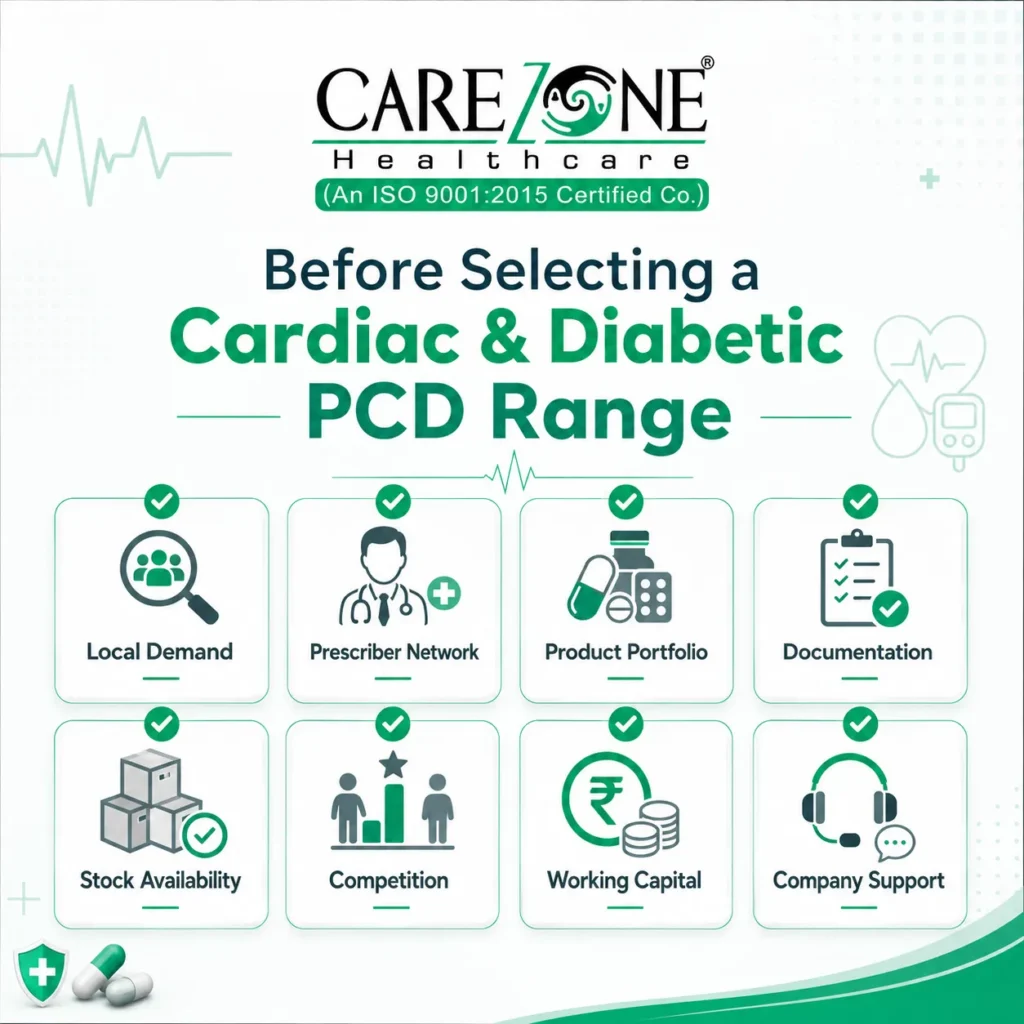
Before selecting a therapy, a PCD partner should answer several practical questions.
Strong national numbers may not reflect the same demand pattern in every city or district.
A partner should understand local physician coverage, pharmacy demand and existing competition.
A cardiac and diabetes portfolio is generally more relevant when the partner understands the doctors, specialists, pharmacies and healthcare channels connected with these categories.
A broad catalogue has limited business value if key products are not consistently available.
Supply continuity should therefore form part of the selection process.
Fast-growing categories frequently attract established companies and strong distribution networks.
The opportunity needs to be evaluated together with competitive intensity.
A therapy-focused portfolio may involve multiple SKUs.
Stocking too many products without adequate rotation can put unnecessary pressure on working capital.
The more useful business question is therefore not:
“Which therapy is growing fastest?”
It is:
“Which growing therapy best matches my territory, professional network, product knowledge and investment capacity?”
Carezone Healthcare’s current PCD Franchise page explains the company’s existing enquiry process, territory discussion and product-planning approach.
July 2026 pharmaceutical-market reporting indicated that the North Zone recorded approximately 15% regional value growth, along with reported unit-volume growth of around 5.42%.
Carezone Healthcare is based in Ambala, Haryana, which makes North Indian pharmaceutical-market trends relevant to its business context.
However, a regional aggregate should not be interpreted as proof that every market across Haryana, Punjab, Chandigarh, Himachal Pradesh, Delhi or other northern territories grew at the same rate.
Market conditions vary significantly by state, district, therapy and distribution network.
For readers who want to understand the company itself, see Why Carezone Healthcare Is a Trusted Pharma Manufacturer in Ambala.
You can also review About Carezone Healthcare for the company’s current business profile.
A PCD partner should avoid choosing a chronic-therapy portfolio simply because national market percentages look attractive.
A practical selection process should consider:
A smaller but carefully selected range can sometimes make more commercial sense than a large catalogue containing products with limited relevance to the territory.
Business partners can review Carezone Healthcare’s broader Product Range before finalising a therapy-based enquiry.
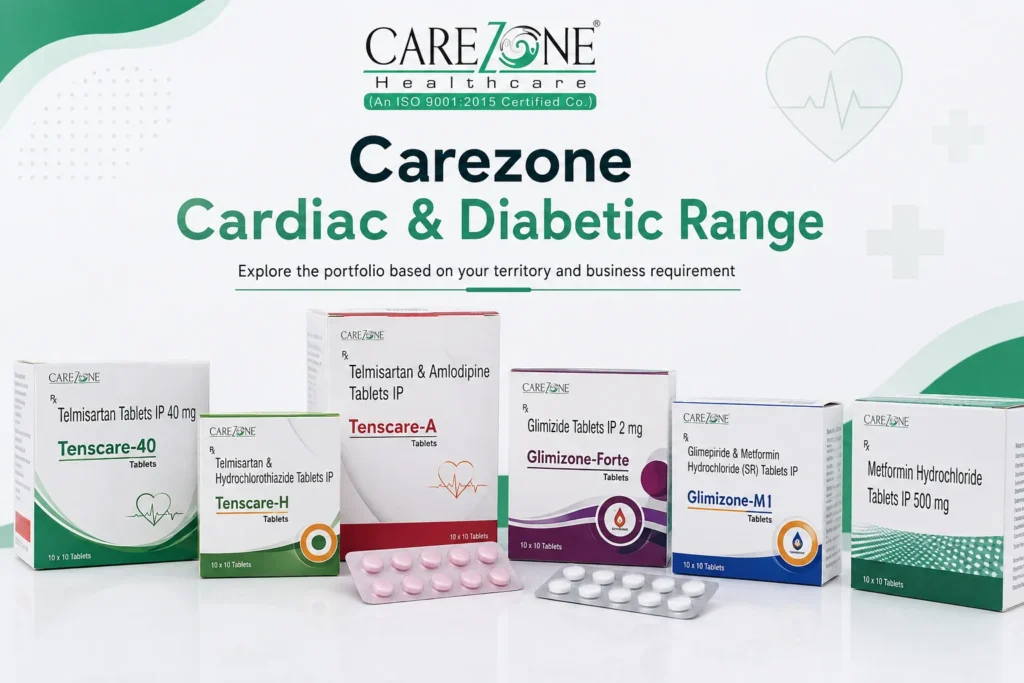
Carezone Healthcare’s supplied product archive contains a dedicated Cardiac and Diabetic therapy category.
Authentic Carezone product packs represented in the supplied archive include:
These product names are included only to describe the supplied Carezone business portfolio.
This article does not provide medical indications, prescribing recommendations, dosage advice or treatment claims for these products.
Carezone’s live website also maintains a dedicated Cardiac & Diabetic Range for current product and business discussions. Product availability, composition, packaging and commercial terms should be confirmed with the Carezone Healthcare team before any order or franchise decision.
National reports provide useful context, but local wholesalers, chemists, doctors and existing distribution partners provide more direct insight into a specific market.
A therapy portfolio should complement your existing doctor, pharmacy and distributor relationships wherever possible.
Serious pharmaceutical business buyers should verify applicable company and product documentation before finalising a partnership.
Supply continuity is important across pharmaceutical categories and can be especially relevant when building a focused chronic-therapy portfolio.
Evaluate existing brands, price positioning, distribution strength and doctor familiarity in the territory.
Buying more products does not automatically create a stronger business.
Inventory should reflect working capital and realistic market movement.
Discuss current price lists, billing, payment terms, minimum order requirements where applicable, logistics and territory conditions clearly.
Do not assume that monopoly rights, samples, promotional material, territory exclusivity or other support are automatically included.
Confirm the current terms directly with the company.
The July 2026 market numbers suggest that chronic therapies deserve close attention from pharmaceutical businesses.
But market growth should guide research, not replace it.
For a PCD partner, a more disciplined process is:
Market Trend → Territory Study → Prescriber Network → Product Selection → Documentation → Commercial Discussion → Inventory Planning
This sequence helps reduce the risk of selecting a therapy simply because its national growth percentage appears attractive.
Carezone Healthcare’s dedicated Cardiac & Diabetic Range should be the natural next step for readers who want to explore the company’s portfolio.
Partners who first want to understand the franchise business model can review the PCD Franchise opportunity or the detailed PCD Pharma Franchise 2026 Guide.
This creates a useful information journey:
Market Research → Therapy Understanding → Product Portfolio → PCD Business Model → Business Enquiry
rather than turning market intelligence into a direct sales pitch.
Yes. The Indian pharma market 2026 recorded approximately 12.1% year-on-year value growth in July, reaching around ₹23,193 crore according to Pharmarack-based industry reporting. Growth was not uniform across therapies, with several chronic and specialty categories expanding faster than the overall market.
The cardiac therapy segment recorded approximately 14.7% year-on-year value growth in July 2026, with reported monthly market value of around ₹3,299 crore.
Anti-diabetic therapies recorded approximately 17.6% year-on-year value growth in July 2026 and generated around ₹2,237 crore in reported market value.
No. Anti-neoplastics reportedly recorded approximately 21.1% growth during July. Cardiac and anti-diabetic therapies are notable because they are already large chronic segments and both grew faster than the overall pharmaceutical market.
Chronic categories relate to conditions that commonly require continuing healthcare management. India’s substantial hypertension and diabetes burden, together with expanding screening, diagnosis and treatment coverage, gives chronic therapies significant long-term healthcare relevance.
No. National market growth does not guarantee sales, margins or profitability in a specific franchise territory. Local demand, competition, product choice, distribution network, working capital, availability and business execution all influence results.
Partners should evaluate local demand, prescriber relationships, relevant product portfolio, documentation, supply continuity, competition, working capital and company support before committing to a therapy range.
Yes. Carezone Healthcare has a dedicated Cardiac & Diabetic Range for product catalogue, PCD franchise and business enquiry discussions. Product availability and commercial terms should be confirmed directly with the Carezone team.
The Indian pharma market 2026 data points to an increasingly important role for chronic therapies in domestic pharmaceutical growth.
Cardiac therapies recorded approximately 14.7% growth and anti-diabetic therapies approximately 17.6% growth in July, both ahead of the overall IPM growth rate of 12.1%.
However, the figures need to be interpreted responsibly.
Price movement and new product introductions contributed significantly to pharmaceutical value growth, while actual unit-volume growth was substantially lower. National market performance therefore cannot predict the commercial outcome of an individual PCD territory.
For pharmaceutical business partners, the practical opportunity lies not in blindly following the largest percentage.
A stronger approach is to combine:
current market intelligence + local demand + relevant products + reliable availability + documentation + disciplined business planning.
That combination is more useful than any national growth statistic on its own.
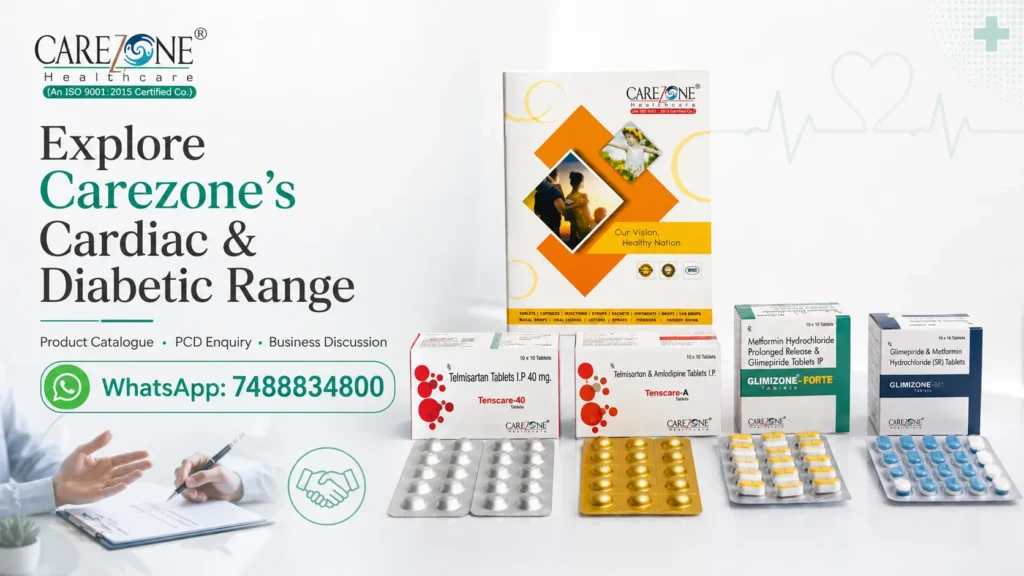
If you are evaluating a PCD Pharma Franchise or planning to expand an existing pharmaceutical portfolio, Carezone Healthcare can discuss its current cardiac and diabetic range according to your preferred territory and business requirements.
Explore the Cardiac & Diabetic Range, review the complete Carezone Product Range, or submit your requirement through the Contact Us page.
Call / WhatsApp: 7488834800
Email: info@carezonehealthcare.com
Suggested WhatsApp Message:
Hello Carezone Healthcare, I would like details about your Cardiac & Diabetic PCD range. Please share the current product catalogue and business information.
This article is intended for pharmaceutical-industry and business education. Pharmaceutical market growth does not guarantee PCD franchise sales, margins, territory performance or business returns. Product availability, commercial terms and territory conditions may change and should be confirmed directly with Carezone Healthcare.
Any medicine referenced in this article should be used only as legally appropriate and under qualified medical supervision where prescription requirements apply. This article does not provide diagnosis, dosage advice or treatment recommendations.
View all

April 21, 2025 | by Carezone Healthcare

May 31, 2025 | by Carezone Healthcare
April 18, 2025 | by Carezone Healthcare